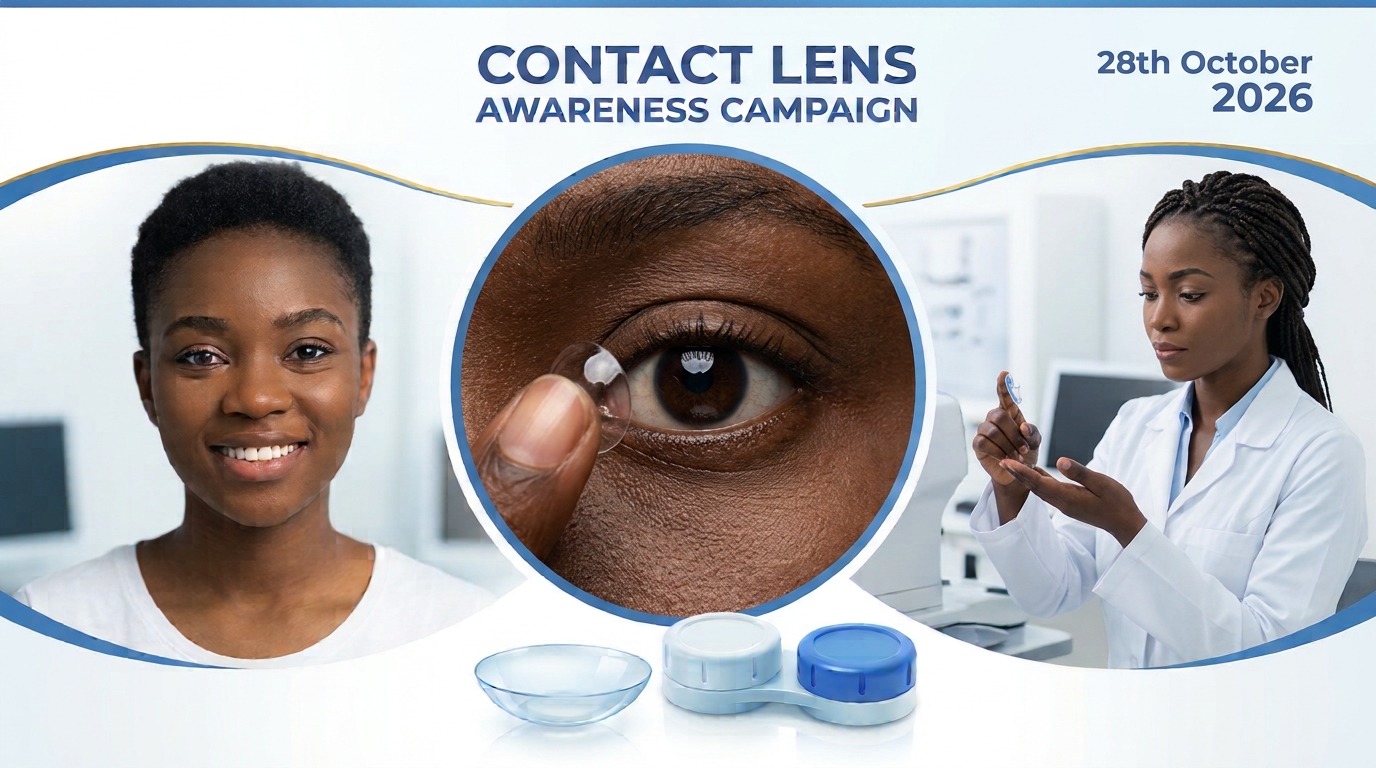
The use of spectacles is not the only solution for the correction of the refractive errors there is an alternative solution which is the use of contact lenses. Considering that contact lenses are not commonly used in Malawi the department of optometry at Mzuzu university conducted a contact lenses awareness campaign on the 28th of October 2026. Mzuzu university was a suitable venue for this campaign because it brought together students and other members of the university community who can benefit from the practical accessible eye health information. The initiative brought educational information to students and all members of the Mzuzu university community. The awareness campaign aimed to promote responsible use of contact, challenges faced by contact lenses wearers, common misconceptions and encourage individuals to consult qualified eye care professionals before they obtain and use of contact lenses. Apart from that the campaign also focused on the potential benefits and precautions which ensures safe use of contact lenses, it also gave room for the organisers to address knowledge gaps, encourage responsible decisions regarding the use of contact lenses and strengthened the awareness of contact lens hygiene which maintains ocular health. The campaign aroused curiosity among participants who were approached, questions were asked and accurate responses were given. This gave the organisers an insight into the attendees existing knowledge and understanding of contact lenses.
Contact lenses offer advantages over spectacles by playing a crucial role in the correction of refractive errors and also offer therapeutic benefits in management of certain ocular conditions. They can also provide a convenient wider field of view and flexibility for individuals involved in sports and other activities. Contact lenses are given to people depending on the visual needs, ocular health and life style. However, the decision to use contact lenses should be informed by accurate knowledge rather than appearance and information obtained from unreliable sources. Misconceptions about contact lenses may cause some people to overlook the need for professional assessment, proper cleaning and adherence to recommend wearing schedule. Incorrect use of contact lenses can result in discomfort, corneal injury and eye infections that can compromise visual health. For this reason, individuals considering the use of contact lenses need guidance from the qualified eye care professionals on the selection, insertions, removal, hygiene and follow up.
Members of the organising team interacted directly with students and stuff members of the university, explaining the purpose of contact lenses their advantage compared with spectacles. The campaign adopted an interactive approach to engage the students and stuff members and the university community this increased the understanding of contact lenses among them. Face to face discussion allowed the participants to ask questions about contact lenses in addition to that, educational fliers were also given to the participants as a reference for further learning. The campaign also enabled to identify additional gaps in the community’s knowledge and understanding of ocular disease. This highlighted the need for further public education on ocular disease and general eye health
The continuation and expansion of such awareness campaigns have the potential to extend their impact beyond the university community, reaching wider populations and contributing to improved public awareness of ocular health. However, achieving this broader impact requires sustained collaboration between the Mzuzu University Department of Optometry and external organisations with expertise in eye health promotion and ocular health awareness initiatives. Through such strategic partnerships, future campaigns can benefit from shared expertise, resources and broader community outreach opportunities. Ultimately, these collaborative efforts can help transform eye health awareness from a campus-based activity into a broader community initiative, fostering a more informed society and contributing to the prevention of avoidable visual impairment.